
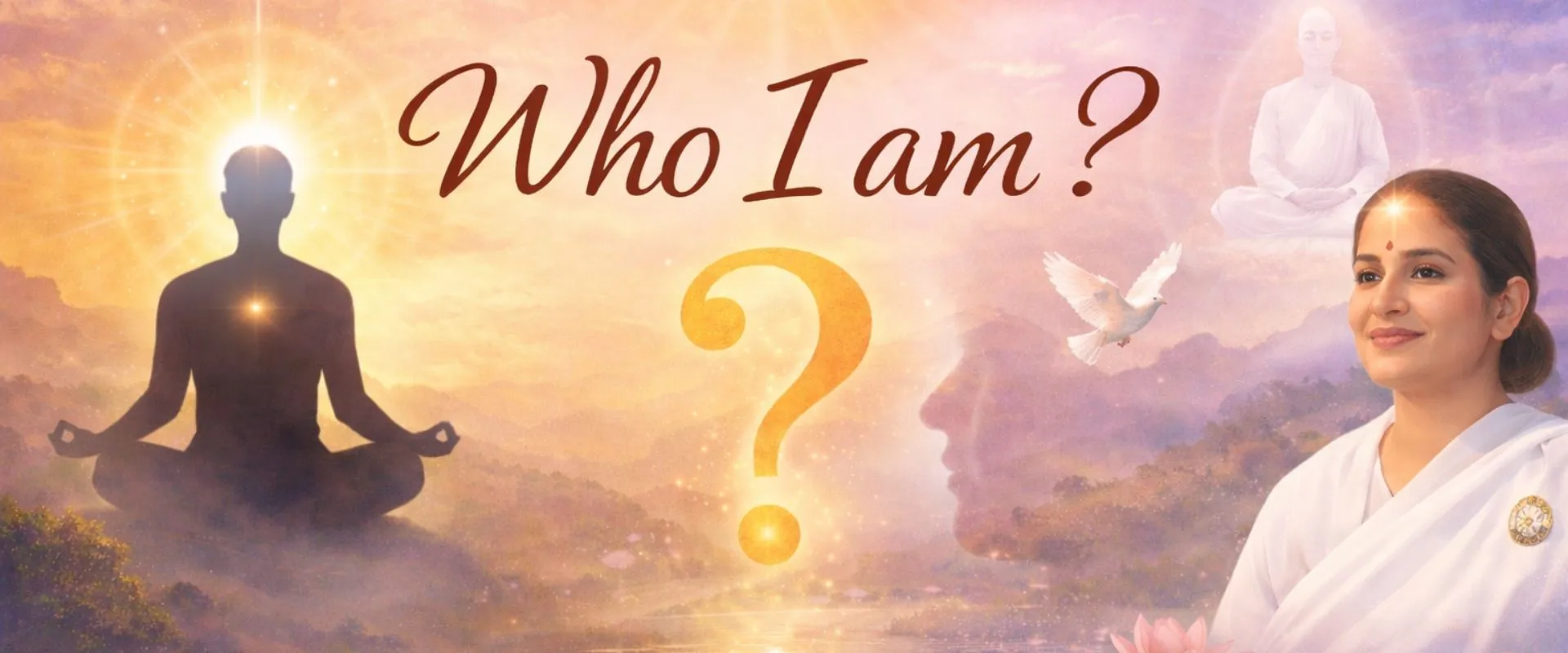
When asked this question, most people respond with identities such as: I am a man or a woman. I am a human being. I am a wife, a mother, a father. I am a farmer, a police officer, a lawyer. I am a Malayali. I am an Indian. I belong to a religion.
The list seems endless.
But are these truly who I am—or are they simply the roles I play in the vast drama of life?
Before becoming a profession, a nationality, a relationship, or a label, I already existed. That means I am not the role itself, but the actor who gives life to these roles.
So then—who am I really?
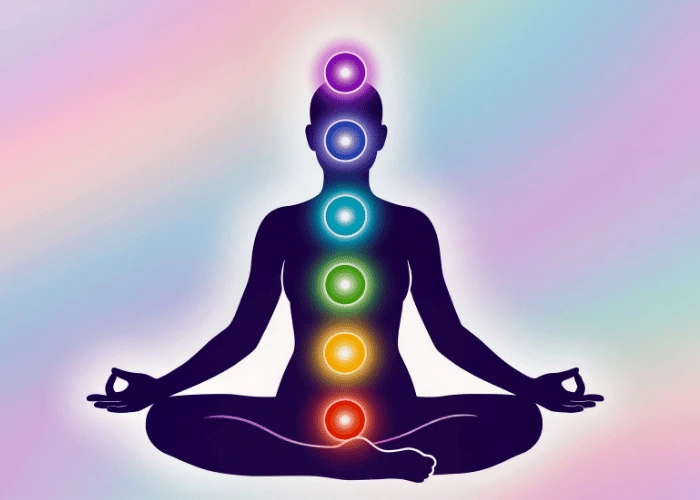
Soul Consciousness: The First Step
At Brahma Kumaris Ishwariya Vishwavidyalaya, the very first lesson of spiritual knowledge is the awareness:
“I am a soul.”
The soul is a subtle, invisible point of light—full of consciousness and energy. Yet for a long time, we mistakenly believe, “I am this physical body.”
Pause for a moment. Observe yourself.
If you experience that “I am residing in the brain and directing this body,” this awareness itself is self-realization.
The Path to Self-Realization
From ancient times, philosophers have taught that when one observes oneself beyond the limits of body-consciousness, true existence becomes clear.
As awareness shifts from body pride to soul consciousness, the innate qualities of the soul begin to awaken.
When this happens, the mind, intellect, behavior, and even the body begin to function with clarity, accuracy, and grace.
The natural outcome is a deep and lasting experience of peace.
The Three Powers of the Soul
Every soul expresses itself through three inherent powers:
Just as electricity appears as light through a bulb, wind through a fan, and heat through a heater—though the energy is one—the soul expresses itself simultaneously through these three faculties. They are distinct, yet deeply interconnected.
Mind
The mind is the faculty that creates thoughts.
It is the source of emotions, desires, and restless thinking. Thoughts generated by the mind may quickly turn into words and actions, leading to experiences of happiness or sorrow.
Often, people believe the heart is the mind—but the heart is only a physical organ.
The mind belongs to the soul, not the body.
Intellect
The intellect is the power that discerns and decides.
Before a thought becomes speech or action, the intellect evaluates it.
Through spiritual study and meditation, the intellect becomes refined, deep, and expansive—leading to elevated words and meaningful actions.
Though the brain is commonly associated with intelligence, it is merely the control center of the body. The subtle intellect belongs to the soul and cannot be equated with the physical brain.
Culture (Sanskaras)
Repeated thoughts and actions create sanskaras—deep-rooted impressions within the soul.
Once formed, these sanskaras influence future thoughts, desires, and behavior, often unconsciously.
This is why it is said:
A person’s personality is the sum total of thoughts, actions, and sanskaras.
The True Identity
What is that which cannot be cut by weapons, burned by fire, dissolved in water, or dried by wind?
It is an eternal point of conscious energy—the soul.
The soul is the embodiment of peace, love, and joy.
That soul is me.
I am the one who thinks, remembers, understands, and decides.
I am the one who experiences color, sound, smell, taste, and touch.
I am subtle, eternal, and conscious.
I am not the body.
I am the soul.